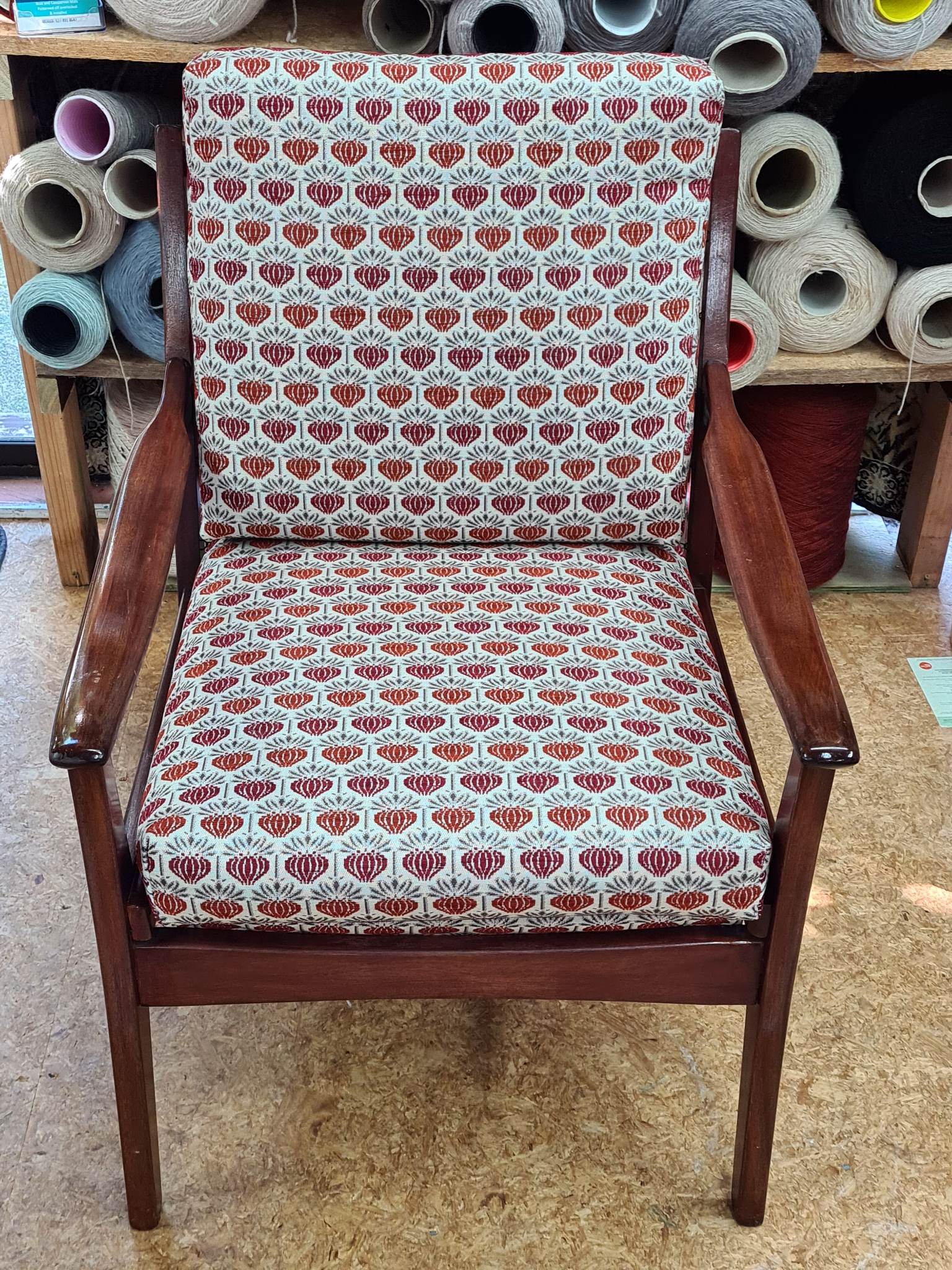
Mid-century chairs turn up at the workshop constantly — teak frames from the 60s and 70s, clean lines, solid construction, fabric that's had its day. These are some of the best candidates for reupholstery going.
Why Mid-Century Frames Restore So Well
Teak and walnut frames from this era were built properly. Mortise-and-tenon joints, solid hardwood, no particleboard. The engineering outlasts the fabric by decades. Recover one and you're sitting on it for another thirty years.
Check the Frame Before You Buy
If you're shopping for a piece to restore, look for tight joints, no cracks in the rails, and original legs (not replaced with mismatched hardware). Surface scratches on teak are cosmetic — they sand back easily. Structural cracks are a different conversation.
Fabric Choice for Mid-Century Profiles
These chairs have strong silhouettes. Bold geometric patterns, textured weaves and period-appropriate colours work well. The chair in our gallery uses a rust and cream repeat — it suits the angular teak frame without fighting it.
Avoid heavy traditional florals on clean mid-century lines. The shape does the talking; the fabric should support it, not compete.
Protect the Timber
During reupholstery, exposed timber gets masked and protected. After recovery, a light oil or wax keeps teak looking warm without a plastic-coated finish. I can advise on timber care when you collect.
Have a mid-century piece in mind? See our lounge and armchair service or bring it to the workshop for assessment.